What is Asset Tracking? A Complete Guide for Maintenance Teams
Quick Answer
Asset tracking is the process of using digital technologies — barcodes, QR codes, RFID tags, BLE beacons, GPS, and IoT sensors — to monitor the location, condition, and usage of physical assets like tools, equipment, vehicles, and inventory. It gives maintenance teams real-time visibility into where their equipment is and how it's being used, replacing manual spreadsheets and paper logs with centralized, automatically updated data.
Key Takeaways
- Asset tracking covers four core technologies: barcode/QR code, RFID, GPS, and BLE beacons — each suited to different environments.
- Asset tracking and asset management are related but distinct: tracking is about location and status; management covers the full asset lifecycle.
- RFID and BLE beacons don't require line of sight, unlike barcode scanning, making them better suited to high-volume or indoor environments.
- GPS is effective outdoors (vehicles, field assets) but doesn't work reliably indoors.
- Combining asset tracking with a CMMS like InnoMaint connects location data directly to maintenance scheduling and history.
Maintenance for large-scale companies has become increasingly complex. Teams need to know where their assets are, how they're being utilized, and when they need servicing. Asset tracking gives teams that visibility by letting them monitor tools, equipment, and other key resources in real time.
When assets can't be found promptly, downtime goes up, productivity goes down, and maintenance teams waste time searching for equipment instead of fixing problems. This is exactly where asset tracking becomes critical.
These assets can include:
- Tools and equipment
- Vehicles and mobile assets
- Production and machinery equipment
- Parts and inventory
- IT hardware and equipment
With centralized software, an asset tracking system lets businesses record asset information, track movement between locations, and monitor performance continuously.
Maintenance personnel no longer need to rely on paper logs or manual spreadsheets. Asset tracking software surfaces accurate asset data immediately, making it easier to see how things are going and ensuring teams always know where their equipment is and how well it's working.
This guide covers how asset tracking works, its benefits, and how maintenance teams can use modern asset tracking software like InnoMaint to do it well.
Why Asset Tracking Is Important for Maintenance Teams
Maintenance teams need fast access to tools, equipment, and spare parts. When asset information is wrong or out of date, maintenance work becomes less efficient across the board.
Physical asset tracking and management deliver several concrete operational benefits.
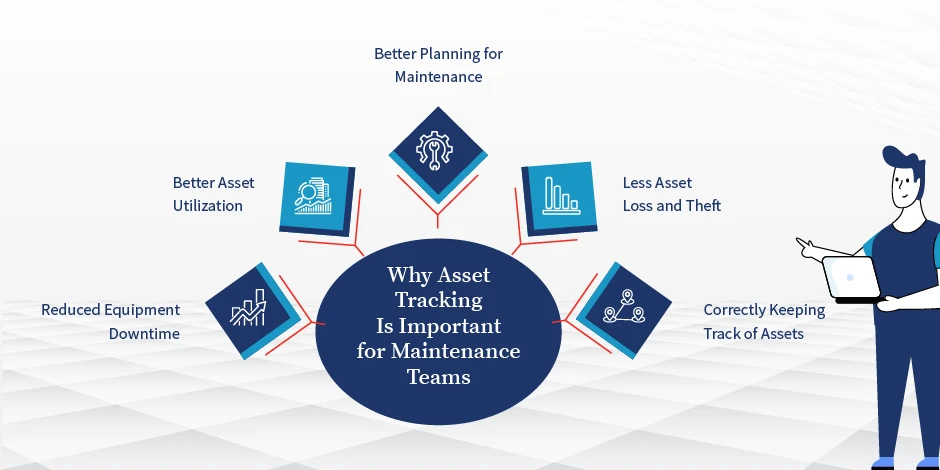
1. Reduced Equipment Downtime
When assets are tracked correctly, maintenance teams can locate equipment and machinery promptly, speeding up repairs and getting things back to working order faster.
With a digital asset tracking system, technicians can quickly find out where a tool is or who currently has it.
2. Better Asset Utilization
Many companies unknowingly buy extra tools because they can't locate the ones they already own. Asset tracking solves this by making every available asset visible.
Companies can ensure equipment is used efficiently across departments by leveraging industrial asset tracking.
3. Better Maintenance Planning
Asset tracking systems keep detailed records, including:
- Service records
- Maintenance plans
- Asset usage data
- Performance metrics
This information helps maintenance teams plan ahead and avoid issues that come up unexpectedly.
4. Less Asset Loss and Theft
Tools and equipment often move between job sites or facilities. Without adequate tracking, assets get lost or misplaced easily.
Companies can track assets and hold people accountable using RFID asset tracking systems or barcode-based systems.
5. Accurate Asset Records
Maintaining accurate asset records manually is difficult for maintenance crews. Fixed asset inventory software keeps listings up to date and accurate by automating those updates.
How to Track Assets
Asset tracking has three main components: identifying the assets, collecting data, and managing it through software.
1. Identifying Assets
Each item gets a unique identifier, typically through:
- Barcodes and QR codes
- RFID tags
- GPS units
- IoT sensors
These IDs let the system locate and track each asset individually.
2. Collecting Data
Once assets are tagged, data is gathered every time an asset is scanned, moved, or used. Depending on the technology, this can include:
- Location
- Usage information
- Condition status
- Maintenance history
In real-time asset tracking, sensors continuously send asset data back to the system.
3. Asset Tracking Software
Centralized asset tracking software keeps every piece of asset information in one place. This platform lets maintenance teams:
- See where assets are located
- Monitor asset status
- Set up maintenance tasks
- Generate reports
- Track asset performance
Platforms like InnoMaint combine asset tracking with maintenance management, making it easier for teams to manage both equipment and maintenance tasks in one place.
Various Technologies for Asset Tracking
Companies can use several different technologies to track assets, depending on operational needs. Here's a comparison of Barcode vs. RFID vs. GPS vs. BLE Beacon.
|
Technology |
How It Works |
Best Use Case |
Key Advantages |
Limitations |
|
Barcode / QR Code |
Scanned visually using a mobile device |
Small tools, inventory tracking |
Low cost, easy to implement |
Requires line of sight, manual scanning |
|
RFID |
Uses radio waves to detect tags automatically |
Warehouses, bulk asset tracking |
No line of sight, fast scanning |
Higher setup cost |
|
GPS |
Uses satellites to track location |
Vehicles, outdoor assets |
Real-time outdoor tracking |
Not effective indoors |
|
BLE Beacon |
Sends Bluetooth signals detected by nearby devices |
Indoor asset tracking |
Low power, real-time indoor tracking |
Requires receivers or mobile devices |
Tracking with Barcodes and QR Codes
Barcode and QR code systems are among the most common ways to track assets.
Here's how it works:
- A barcode or QR code is attached to the asset.
- Technicians scan it using their mobile phones.
- The system automatically updates the asset's data.
This method is low-cost and straightforward, making it ideal for tracking and managing physical assets.
Tracking Assets with RFID
RFID (Radio-Frequency Identification) asset tracking solutions track assets automatically using radio waves.
RFID tags are attached to assets, and RFID scanners detect the tags as items pass by. Unlike barcode scanning, RFID doesn't require a direct line of sight.
Key benefits of RFID include:
- Faster scanning
- Automatic asset identification
- Less manual labor
- Better inventory accuracy
Warehouses, factories, and shipping companies rely heavily on this technology.
Tracking IoT Assets
IoT asset tracking uses internet-connected sensors to monitor assets continuously and transmit data in real time.
IoT sensors typically monitor:
- Asset location
- Vibration and temperature levels
- Operating conditions
This technology plays a vital role in monitoring equipment health.
Companies can pair IoT with maintenance software like InnoMaint to run predictive maintenance and catch problems before they happen.
Tracking Assets with GPS
GPS tracking is commonly used to monitor vehicles and mobile assets that move frequently.
It gives companies real-time visibility into asset movement, which is especially useful for logistics, transportation, and field service operations.
Tracking Assets with BLE Beacon Technology
Bluetooth Low Energy (BLE) beacon technology monitors assets in real time, particularly in indoor environments.
BLE beacons attach to assets, and nearby devices like smartphones or gateways detect their signals to determine location and movement. BLE doesn't require GPS and works effectively indoors.
Key benefits of BLE beacons include:
- Real-time indoor tracking
- Low power consumption and long battery life
- Easy deployment with minimal infrastructure
- Improved asset visibility
- Proximity-based alerts
Warehouses, hospitals, offices, and manufacturing facilities widely use this technology to track tools, equipment, and inventory.
How Does Asset Tracking Work in Real Time?
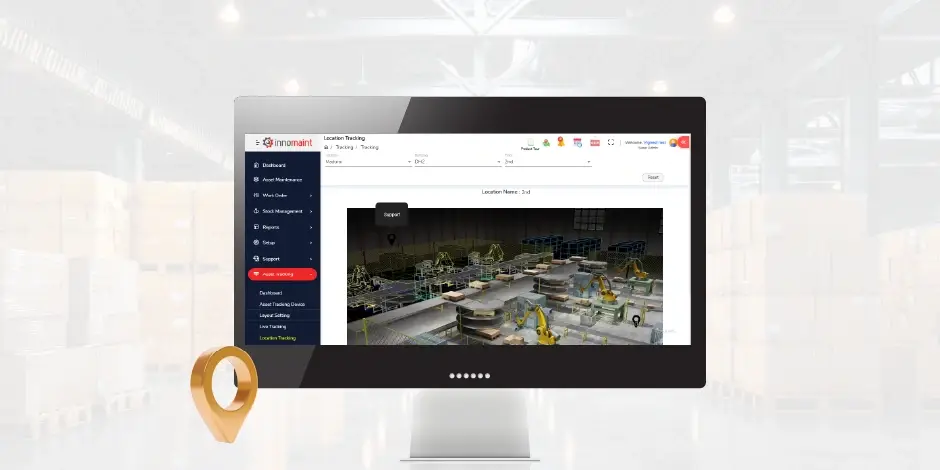
Traditional asset monitoring relies on manual updates, which can leave asset data out of date or inaccurate.
Real-time asset tracking solves this by showing where assets are located and how they're performing as it happens.
Maintenance personnel can track assets instantly across sites using RFID, BLE beacons, GPS, or IoT sensors.
This lets companies:
- Find equipment quickly
- Track how assets are used
- Monitor how assets flow across departments
- Respond faster to maintenance issues
Organizations operating complex equipment environments need real-time asset tracking to keep pace.
Asset Tracking vs. Asset Management: What's the Difference?
These terms often get used interchangeably, but they're not the same thing.
| Term | What It Covers |
|---|---|
| Asset Tracking | Monitoring where assets are and how they move |
| Asset Management | Managing the full asset lifecycle — from purchase through maintenance to disposal |
InnoMaint is an integrated platform that combines both, providing tools for tracking assets and managing maintenance in one complete system. This integration gives maintenance teams better information so they can make better decisions.
Important Features of Asset Tracking Software
Modern asset tracking software includes several features that make asset management significantly easier.
Centralized Asset Database
A central database tracks all asset information, including:
- Asset location ID
- Maintenance history
- Asset condition
- Warranty information
This ensures all asset data comes from a single, reliable source.
Mobile Access
Technicians can access asset information on mobile devices while working in the field or on the production floor.
With mobile apps, teams can:
- Scan asset tags
- Update asset records
- Log maintenance work
- View asset history
Automated Maintenance Scheduling
Many asset tracking platforms include maintenance scheduling features, letting teams:
- Plan recurring maintenance
- Receive maintenance alerts
- Track when maintenance is completed
Reporting and Analytics
Detailed reporting and analytics from asset tracking software reveal how well assets are performing.
These reports help companies identify:
- Underutilized assets
- Equipment that breaks down frequently
- Maintenance cost trends
- Asset lifecycle performance
Advantages of Tracking Industrial Assets
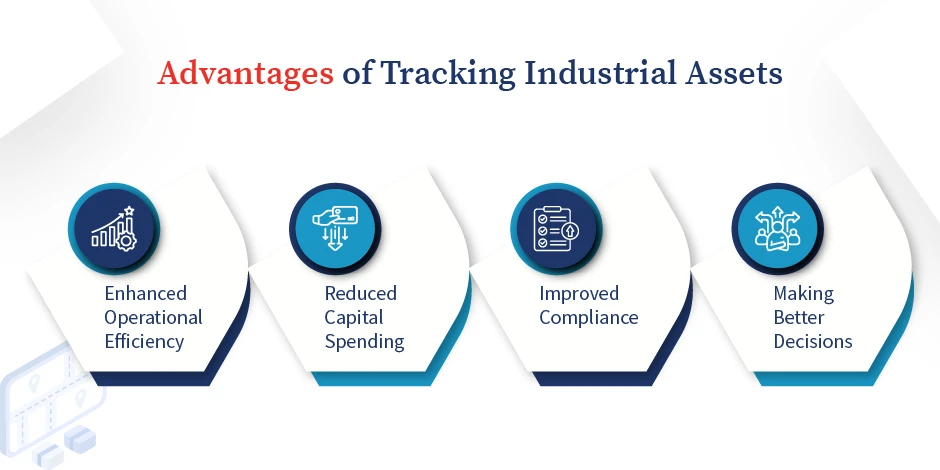
Keeping operations running smoothly depends heavily on effective asset tracking.
Industrial asset monitoring helps manufacturers and maintenance teams keep track of large volumes of tools, equipment, and replacement parts across complex facilities.
Key benefits include:
Enhanced Operational Efficiency
Maintenance staff can locate tools and equipment quickly, cutting down on repair delays.
Reduced Capital Spending
Better visibility into existing assets prevents unnecessary equipment purchases.
Improved Compliance
Accurate asset records help organizations meet audit and regulatory requirements.
Better Decision-Making
Asset performance data helps organizations make informed choices about repair versus replacement.
How InnoMaint Helps Teams Keep Track of Assets
Modern maintenance teams need more than just asset location tracking. They need a solution that connects asset information directly to maintenance tasks.
InnoMaint offers a full maintenance management platform with advanced asset tracking features.
With InnoMaint, companies gain several advantages:
- Monitor asset usage and location
- Maintain detailed records of all assets
- Schedule maintenance before problems arise
- Evaluate equipment performance
- Generate maintenance reports
By integrating asset tracking with maintenance management, InnoMaint helps businesses boost equipment reliability and streamline maintenance processes.
Best Practices for Establishing an Asset Tracking System
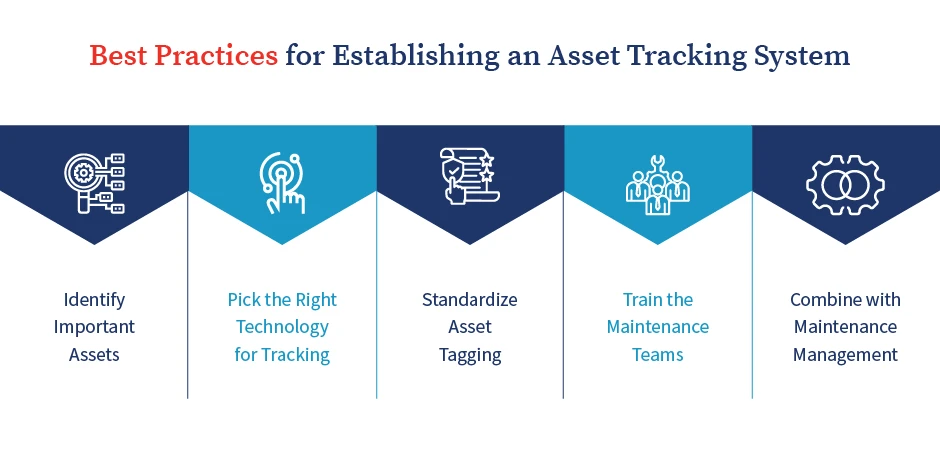
Getting an asset tracking system to work well requires preparation ahead of time.
Identify Important Assets
Start by figuring out which assets matter most to track. These usually include expensive equipment, heavily used items, and machines critical to core operations.
Pick the Right Tracking Technology
Choose a tracking technology that matches your business needs:
- Barcode systems for simple tracking
- RFID for automated inventory management
- IoT sensors for equipment monitoring
Standardize Asset Tagging
Make sure all assets are labeled consistently with unique identifiers. This prevents mix-ups and ensures assets are tracked correctly.
Train the Maintenance Team
Give technicians and maintenance staff the training they need to use the system correctly from day one.
Integrate with Maintenance Management
Get the most value from asset data by combining it with a maintenance management system like InnoMaint.
What Will Asset Tracking Look Like in the Future?
Asset tracking is evolving quickly as organizations adopt increasingly advanced technologies.
Emerging trends include:
- AI-powered asset analytics
- IoT sensors supporting predictive maintenance
- Cloud-based asset tracking systems
- Digital twins for asset monitoring
These technologies will help organizations pay closer attention to their equipment and simplify maintenance overall.
As smart manufacturing becomes more widespread, real-time IoT-based asset tracking will only become more important for keeping processes efficient.
[FLAG: This section is a good spot for a citable market-size statistic (e.g. global asset tracking or RFID market size and projected growth), similar to the MarketsandMarkets figure used in the Industry 4.0 post. I haven't added one here since I don't have a verified current figure to cite — pulling one from a named source (Semrush-adjacent market report, Gartner, MarketsandMarkets) would strengthen this section for AI citation.]
Frequently Asked Questions
What is asset tracking?
Asset tracking is the process of using digital technologies like barcodes, RFID, GPS, and IoT sensors to monitor the location, condition, and usage of physical assets in real time.
What is the difference between asset tracking and asset management?
Asset tracking focuses on monitoring where assets are and how they move. Asset management covers the full asset lifecycle, from purchase through maintenance to disposal.
Which asset tracking technology is best?
It depends on the environment. Barcodes work well for low-cost, simple tracking; RFID suits high-volume warehouse or bulk tracking; GPS is best for vehicles and outdoor assets; BLE beacons are best for real-time indoor tracking.
Does RFID asset tracking require line of sight?
No. Unlike barcode scanning, RFID uses radio waves and can detect tagged assets automatically without a direct line of sight, making it faster for bulk or warehouse tracking.
Can GPS be used to track indoor assets?
No. GPS is effective for outdoor tracking, such as vehicles and field assets, but does not work reliably indoors. BLE beacons or RFID are better suited for indoor asset tracking.
How does asset tracking reduce downtime?
By giving maintenance teams real-time visibility into asset location and condition, asset tracking eliminates the time technicians would otherwise spend searching for tools or equipment, allowing repairs to start sooner.
Can asset tracking be combined with a CMMS?
Yes. Platforms like InnoMaint combine asset tracking with maintenance management, connecting location and condition data directly to maintenance scheduling, history, and reporting.
Final Thoughts
For maintenance teams, asset tracking is a crucial capability in today's landscape. It allows businesses to streamline maintenance operations, minimize operational interruptions, and maximize asset utilization by providing immediate access to data on asset locations, usage patterns, and overall performance.
Companies can better manage their physical assets using technologies like barcode scanning, BLE beacon tracking, RFID asset monitoring, or IoT-based asset tracking.
With a robust maintenance platform like InnoMaint, asset tracking becomes significantly more valuable. Maintenance personnel gain the ability to do far more than monitor assets — they can schedule maintenance, evaluate asset performance, and make data-informed decisions.
As facilities grow more complex and equipment becomes increasingly interconnected, a strong asset tracking system will be essential for maintaining smooth, efficient operations.
For maintenance teams aiming for better visibility and control over their equipment, modern asset tracking software has evolved from a nice-to-have into a strategic necessity.
Frequently Asked Questions
Tracking assets cuts down on idle time, makes better use of what’s available, and helps prevent things from going missing. It also streamlines maintenance schedules and gives a clear view of what’s happening with the equipment, right now.
Depending on the use case, any one of the following technologies can be used.
- Barcodes – low-cost tracking
- RFID – automation
- GPS – outdoor assets
- BLE beacons – indoor tracking
- IoT – condition monitoring
Asset tracking focuses on location and movement. Asset management covers the full lifecycle, including maintenance, performance, and disposal.
It helps with immediate data, assists in scheduling maintenance tasks, and keeps a record of an asset’s history, leading to greater efficiency and fewer manual processes.