Unlock Superior Asset Management with Our Free EAM Strategy eBook!

Access the eBook
The pivotal role of IoT in smart manufacturing, automation, and reducing downtime
The pivotal role of IoT in smart manufacturing, automation, and reducing downtime

The Pivotal Role of IoT in Smart Manufacturing, Automation, and Reducing Downtime

IoT in Manufacturing

Riding the surging wave of the fourth industrial revolution the manufacturing industry is quickly embracing the Internet of Things (IoT) to optimize and automate processes in a massive digital transformation. Manufacturing units leverage faster networks, smart devices, increased connectivity, and limitless capabilities of IoT technology, which signifies a new era in digitization!

Smart manufacturing market prediction

Going by the international smart manufacturing market estimation, the market valued at USD 97.6 billion in 2022 will climb to USD 228.3 billion by 2027 at a CAGR of about 18.5%.

McKinsey survey carried out beyond geographic boundaries reveals industry fraternity crediting their success to digitalization, IoT, and smart manufacturing adoption in particular. Digitization shortened their new product rollout time up to 25-50 percent and reduced make-to-order/make-to-stock manufacturing process costs by up to 30 percent.

Smart factories are advanced digitized solutions that count on data, IoT, AI, and ML technologies to enhance the efficiency and quality of manufacturing operations. These technologies serve as the cornerstone for competitive advantages. Deloitte’s survey that 61% of manufacturers seek specialized IoT solutions to enhance their smart factory initiatives ascertains the fact.

Smart Factory for Improved Operational Efficiency

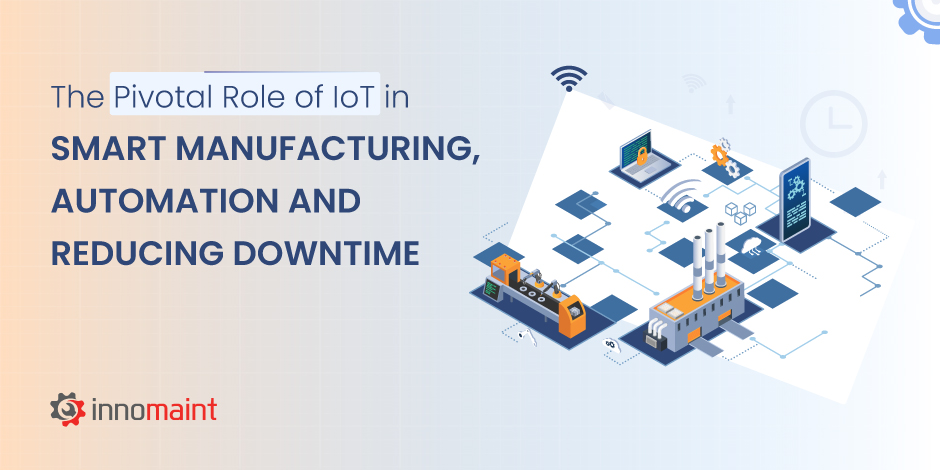
IoT solutions help manufacturers automate more processes, detect equipment anomalies, reduce rework costs, and reduce errors. It thus helps increase operational efficiency.

According to a report by McKinsey, IoT applications in manufacturing have the potential to amplify the economic impact of $1.2 to $3.7 trillion per year by 2025.

A Deloitte research indicates that predictive maintenance powered by IoT technologies reduces equipment breakdowns by 70% and maintenance costs by 25%.

IoT use in manufacturing can reduce the energy costs of machinery by almost 40%, driving sustainable operations.

IoT-based Predictive Maintenance

IoT applications, in conjunction with specialized sensors, can monitor equipment operating parameters, including temperature, pressure, vibration, oil levels, etc., to predict malfunctions before they happen.

It is useful in cases where it is difficult to remove heavy equipment from installed locations at periodic intervals for preventive maintenance. Another instance that necessitates predictive maintenance is in cases where preventive maintenance is costly and unnecessary.

For instance, an Air Quality Monitoring solution can sense the proportion of various gases in the ambient atmosphere and measure the concentration of particulate matter of varying thickness(PM2.5 & PM10). Based on the above observations( along with temperature & humidity calculations), the application can suggest AQI levels needed to provide a balanced and healthy atmosphere for the facility occupants.

Sensors transmit the gathered real-time data instantly to cloud servers via wireless networks. Floor managers can set custom alarms based on any specific criteria. The cloud application sends mobile alerts upon detecting breaches or anomalies.

Unplanned downtime of machinery can have a significant negative impact on productivity. It can cost even up to $260,000 an hour.

Role of IoT and Automation in Quality Control

Smart factory solutions, including IoT and workflow automation solutions, have a telling impact on production quality improvement. Sensors can monitor the quality and dimensions of manufactured goods faster and more accurately than the human eye. By reacting quickly to the deviations, manufacturers can avoid product recalls owing to defects, improving customer satisfaction.

Reduced Costs

IoT Energy metering solution helps industries save significant energy expenses. Shortage of skilled labor is one of the long-term problems of manufacturing industries. Automation reduces the need for human involvement in repetitive or labor-intensive tasks. It frees up the time for labor, enabling them to focus on tasks requiring technical or analytical skills.

Automation reduces human errors and the volume of scrap or waste generated by encouraging the culture of doing it right the first time when it comes to preventive maintenance.

Scalability

Automated systems possess scalability as an inherent characteristic. They adapt to market dynamics and changing production requirements easily. It helps to amplify production volumes and diversify products to keep pace with competition.

So, IoT-powered industrial IoT solutions help the industrial fraternity ramp up production, improve quality, reduce human involvement, and improve visibility and control of operations.

Have you digitized your factory operations?
How is IoT used in energy management

How is IoT used in energy management

How IoT is used in energy management

How is IoT used in energy management

The Internet of Things (IoT) has revolutionized the energy industry and enabled better management of energy use.

It provides a way to monitor and track electricity usage, improve efficiency, and reduce costs. From embedded sensors to smart meters, IoT is driving innovation in the energy sector.

In this article, we will discuss how IoT is used in energy management and explore its potential applications in the near future.

We’ll look at how it can help reduce consumption and identify areas for improvement in how businesses use energy.

Finally, we’ll consider what this means for the future of our planet’s energy supply.

What is IoT?

IoT, or the Internet of Things, is a system of interconnected devices and sensors that collect and share data about their surroundings.

Energy management is one of the many potential applications for IoT. By collecting data about energy use, weather patterns, and building occupancy, IoT can help identify opportunities for energy savings.

For example, if a sensor detects that a room is unoccupied, it can adjust the temperature accordingly to save energy. Or if a sensor detects a sudden spike in energy use, it can alert building staff so they can investigate the cause and take corrective action.

The Benefits of Using IoT in Energy Management

There are many benefits to using IoT in energy management. By connecting devices and systems, you can collect data more efficiently, get real-time insights into energy usage, and automate tasks. This can help you save money, time, and resources.

IoT can also help you improve the efficiency of your operations. By monitoring energy usage in real-time, you can identify areas where improvements can be made. You can then make changes to your processes and operations to reduce energy consumption. This can lead to significant cost savings over time.

In addition, IoT can help you create a more sustainable operation. By reducing energy consumption, you can lower your carbon footprint and help protect the environment. Implementing IoT in your energy management strategy is a great way to improve your bottom line while also making a positive impact on the world around you.

How IoT is Used in Energy Management

IoT is used in energy management in a variety of ways. One way is through the use of smart meters. Smart meters are able to communicate with the power grid and provide data that can be used to manage energy usage.

Another way that IoT is used in energy management is through the use of smart thermostats. Smart thermostats can be controlled remotely and can help to optimize energy usage in a home or business. Additionally, IoT can be used to monitor and manage solar panels and wind turbines. By monitoring the output of these renewable energy sources, businesses and homes can make adjustments to their energy usage to maximize efficiency.

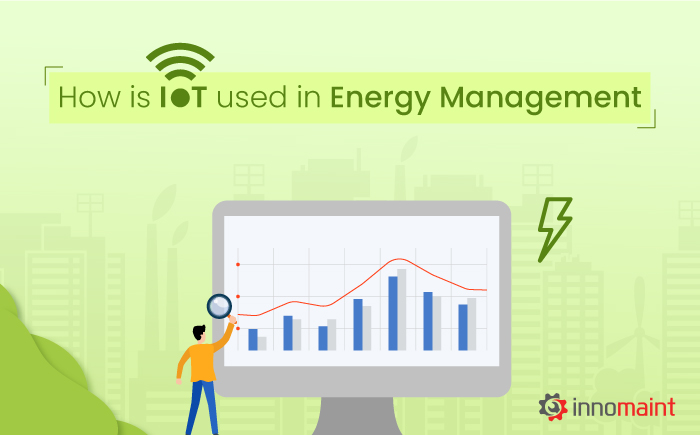
InnoMaint’s Energy Management module is flexible in that you can configure sensors to provide the energy consumption pattern for an entire facility or each tenant. You can define schedules that alert you via mobile push, email, and SMS notifications upon current usage exceeding preset limits. It helps figure out the areas consuming heavy power and initiate remedial measures. The application Dashboard updates you on power consumption patterns every hour throughout the day. It provides exclusive quick digital reports on IoT energy consumption

The Future of IoT and Energy Management

The internet of things (IoT) has the potential to revolutionize the way we manage energy. By connecting devices and systems, IoT can help us automatically collect data and make adjustments to save energy.

In the future, IoT will become more widespread and integrated into our lives. More and more devices will be connected, and we’ll have even more data at our fingertips. This will allow us to be even more efficient in our use of energy.

IoT can also help us move towards renewable energy sources. By monitoring our energy usage, we can better understand where we can cut back and make the switch to renewables. With IoT, we can create a smarter, more sustainable future for ourselves and the planet.

Conclusion

IoT technology is an ever-growing field in the energy industry, with its potential to help people save money and resources while also reducing their carbon footprint.

By utilizing sensors and connected devices, energy management systems are able to monitor data such as electricity usage and temperature fluctuations.

This information allows for more efficient decision-making on when to use specific sources of power or shut down appliances that aren’t necessary.

IoT has also enabled companies to employ predictive analytics so they can anticipate future needs for electricity within their networks.

All these applications demonstrate how innovative solutions derived from the Internet of Things have made a positive impact on energy management strategies around the world.

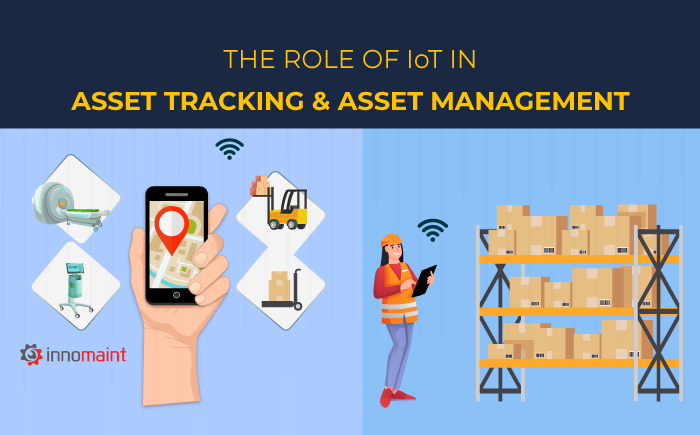
The role of IoT in asset tracking and asset management

The role of IoT in asset tracking and asset management


The Role of IoT in Asset Tracking and Asset Management

Advancement in maintenance automation

In recent decades, business assets have diversified compared to yesteryears. Machinery automate human functions of manufacturing, packaging, processing, etc. Maintenance automation reinforces production automation for further reduction in human involvement

As the next advancement in automation, the Internet of Things(IoT) has set in to smarten facilities by leveraging technologies such as QR codes, BLE, RFID, NFC, GPS, etc. It greatly simplifies the challenges in the day-to-day operations of asset-centric industries. 

Market Size of IoT

According to a forecast by Globe News Wire news agency headquartered in Los Angeles, California, the United States, the global IoT market size valued at USD 478.36 billion in 2022 will soar to USD 2,465.26 billion by 2029 at a Compound Annual Growth Rate of over 26%. Investing in IoT Asset Management solutions will let you see amazing results on a day-to-day basis. 

What Is IoT Asset Management?

IoT Asset management is the process of tracking, monitoring, & managing assets efficiently by mounting tiny sensors over assets or in the facility to track real-time movements of an asset, asset working condition, energy consumption to minute levels of precision, etc. 

The applications of Big Data and IoT are diverse and can work with basically any type of asset. Varieties of sensors are available in the market for measuring temperature, pressure, humidity, acceleration, proximity, etc., that can apply to different use cases. 

You can track the usage hours of an asset using sensors and receive notifications upon asset breakdown or has reached threshold values. IoT technologies incline businesses toward AI-enabled prescriptive maintenance as advocated by Industry 4.0 standards. It’s application can go far and deep into optimizing asset performance and bringing down maintenance expenses. It doesn’t end there, IoT asset tracking offers a host of other value-added benefits as well!

Asset tracking techniques

A QR code-based asset tracking is associated with low running costs and is convenient as every smartphone has a QR code scanning mobile app. If security matters, NFC tags can be prefered that operate only at high frequencies. 

RFID tags can operate in small, high, and ultra-high frequency ranges. They score over NFC when it comes to effectiveness in asset tracking. 

As a viable alternative to these techniques, Bluetooth Low Energy beacons can be used for IoT-powered asset tracking as they are associated with long-range and exact location precision. The tiny devices release signals for every second. A reader detects the signals, within a range of 300 feet, and transmits it to the EAM software or cloud servers. 

BLE is an affordable, mobile battery-friendly technology with a lifespan of up to three years. It is wrapped in water-resistant cases and has the flexibility of being screwed to various assets. It fits for indoor and outdoor use. 

Why is precise asset tracking essential?

Few manufacturing assets like trolleys, stretchers, transport systems, etc., are frequently used. Knowledge on current location of these assets is essential for effective delivery of core business service and customer satisfaction.

With IoT asset management, you can get periodic updates for understanding asset performance which helps in arriving at accurate business decisions and quicker identification of inventory items. By this way, you can shield assets from threats, misplacement and ensure timely availability. So you need not over-purchase the concerned assets avoiding needless expenditures in an organization. Doing away with unnecessary expenses and error-free asset operation is an intrinsic part of business growth, isn’t it? 

Is IoT technology expensive?

IoT technology might have been expensive in the past, but not now. It is becoming more affordable with increase in adoption and usage. You can choose the technology matching your requirements and budget. 

Sensors can store data and possess computing power. New sensor models possess improved computing abilities. Many businesses plan to invest considerably in IoT technology to benefit from groundbreaking innovations. 

Bluetooth Low Energy (BLE) is a relatively new technology, compared to RFID, that has well understood the modern-day requirements of people in the industry. Hence it is enriched with all the necessary functionalities. The range of the BLE reader is 20 feet(the RFID reader range is 1-5 feet). The cost of a BLE reader is much cheaper, starting from $10, with easier integration and smartphone compatibility than its predecessor. 

Quick ROI with accurate business decisions

Since IoT-based asset tracking lets you know the asset condition, you are saved from sudden breakdowns that handicap your operations. You can regulate energy consumption and arrive at informed and accurate business decisions with the valuable analytics information. 

Automated asset management is the need of the hour. The return on investment increases when an asset is best used and maintained well throughout its life cycle. One of the main goals of effective IoT asset management is to optimize the ROI. 

Use Case for IoT-enabled Asset Management – Hospitals

People working in the Health care sector know very well that missing equipment and over-purchasing assets are very common. A 300-bedded hospital loses a shockingly high $7M per year owing to over-purchase. Put an end to this practice with sophisticated asset tracking abilities. 

Health care institutions save 10% of nursing shift hours squandered towards frantic searches for physiotherapy equipment. They can raise the engagement time of biomedical technicians to 208 hrs/year. Misplaced equipment is no more a reason for missing out on the timeliness of patient care. 

Real-Time Location Systems (RTLS) tags can be attached to medical devices such as stretchers, portable X-ray machines, and other valuables for real-time monitoring to benefit a maximum number of patients. Hospitals can also attach these tags to the uniform of staff too for tracking their movements. The work nature of health care professionals mandates them to be on the move within the premises.

Hospital management can ensure high-quality disinfection by attaching metal embedded tags to surgery instruments for tracking them along the autoclave process. They can better secure delicate assets such as tissue samples(to be sent for biopsy), donated blood, vaccines, etc., and maintain in optimal storage conditions with the help of an RFID hospital asset tracking system

We help companies across industry verticals take the next step in digital transformation

We help companies across industry verticals take the next step in digital transformation


Industrial Revolution 4.0

The industry 4.0 concept has penetrated the present industrial world, energizing and propelling many companies to embrace and expand digital transformation, optimizing every nook and corner of the production process.

The industrial sector needs to update itself continuously, not just to excel. Then? For mere survival in the face of stiff competition. What is Industry 4.0 all about? It advocates smart factories, wherein humans and cyber-physical systems interact via the cloud. Such factories are capable of gathering huge volumes of production data. This real-time data is used as a foundation to compute and report valuable operational metrics. These metrics foster a data-driven culture for continuous learning and optimizing operations, driving innovation, competitiveness, and growth. The approach minimizes time and saves operating, utility, and maintenance costs. Such factories can autonomously adapt to production needs instantly.

Automation of manual process

Industry 4.0 calls for automation of processes, eliminating human intervention to the maximum possible extent. The reason is that humans are associated with limitations in error-free operations and tend to get bored performing monotonous tasks. Maintenance chores and data entry works don’t deserve to rob much of your precious time. When applications intimate people on assigned tasks on mobile devices, they don’t tend to forget them. Complete digitization of the value chain is necessary for the all-around improvement of the organization. Digitization enables you to forecast, control and manufacture products intelligently.

Automation replaces manual tasks requiring physical strain with sensors and interconnected systems. It can safely remove the risks associated with hazardous environments. Initial set-up costs are not high in most cases and will prove fruitful eventually.

Audit digital maturity index

Irrespective of your business model, be it Configure to order, Make to Stock, Make to order, Engineer to order, etc. You can make your company digitally advanced. It starts with defining the current digital maturity. The first step is realization of the current business position- where you stand and know where to reach during the digital transformation process. Audit and analyze existing business models, processes, and assets. This self-introspection will provide you with a good start on the journey of Industry 4.0. You can quantify digital maturity based on hardware, software, and cultural factors. A 100% digitized company exercises the best control over the state of the business with out-of-the-box thinking using AI.

Digitization – The game changer

The evolution of companies is significant only when organizations achieve greater efficiency in terms of physical assets and human resources. Digitization helps you optimize the production processes, sparing ample time for strategic tasks wherever needed. For maintenance, structured communication is essential between production assets and operations management. Paper or excel sheet-based maintenance approaches have proved their ineffectiveness and lack of power to scale for decades. Hence let us not elaborate on that.

Cloud Technology, AI & ML

Cloud computing is the primary enabler of Industry 4.0 and digital transformation. Today’s cloud technology & web hosting are associated with high uptime, server speed, scalability, storage, and affordability. It serves as the framework for most advanced technologies ranging from AI and machine learning to the Internet of Things – offering businesses the means to innovate. The data that powers Industry 4.0 technologies resides in the cloud, and the cyber-physical systems, lying at the heart of Industry 4.0 employs the cloud for collaboration.

Why EAM for maintenance automation?

An Enterprise Asset Maintenance(EAM) provides you with a production dashboard with specific functions – production, quality, maintenance, etc., The beauty of EAM lies in translating production and operational data into ‘metrics that matter’ for strategic, tactical, and structured reporting. It manages master data to reveal analytics for ensuring integrity, accuracy, semantic consistency, and accountability of main assets. SMEs need them to perform system-independent operations for streamlining maintenance by leveraging edge, cloud, and other advanced technologies. An EAM offers predictive maintenance capabilities that provide the right balance between preventive and corrective maintenances. The predictive maintenance module triggers a schedule only based on conditions indicated by critical parameters. It is a new technique that combines IIoT with Artificial Intelligence to anticipate future failures.

Automation lies at the heart of digitization. It is the foundation layer over which blocks of capable software such as ERP, CRM, etc., are built for reaching ambitious goals, showcasing your business with a winning edge over a lot of competition, and becoming a part of the present-day innovation.

IIoT, SCADA & PLC

SCADA (Supervisory, Control, and Data Acquisition) systems are a software application suite for remote monitoring, control, and optimization of industrial processes. As an integral part of IIoT(Industrial IIoT), they integrate data collected from various industrial processes and PLCs locally. Build an interconnected digital ecosystem of hardware, CMMS, sensors, PLC & SCADA to reduce carbon emissions by conserving fuel and power for turning your facilities into green buildings. You can regulate energy consumption from the remote location you are by turning off units with unjustifiable consumption.

Importance of cybersecurity

With the increased connectivity and use of Big Data in Industry 4.0, effective cybersecurity must be in place. Companies can automate threat detection, prevention, and response – and minimize the risk of data breaches and production delays across their networks.   

Is Industry 4.0 adoption difficult?

Will Industry 4.0 adoption pose challenges for our staff?

It is common for people to resist any change. History shows excerpts such as the migration from typewriters to computers. Industry 4.0 solutions reduce the complexity for the key stakeholders and all end users.

Technicians, customers, and default asset users can express problem statements or fixes using multimedia illustrations and image annotations. It is an excerpt that digital transformation can go deep into simplifying team collaboration and operations..  Furthermore, many 4.0 technologies facilitate mobile-optimized experiences.

AI powered maintenance management

Expedite industrial maintenance for transforming facilities viewed as cost centers into profit centers by exploring never-before and untapped avenues for savings. Artificial Intelligence powered self-diagnosis can go a step ahead in providing predefined or ready-made solutions that reduce the traffic of needless tickets routed into the system. Such an approach to maintenance management is the need of the hour. To what extent are manufacturing processes and SOPs (Standard Operating Procedures) digitized and integrated to support your organization’s digital vision? Spring into action.

To Automate Your Preventive Maintenance Process

Try Innomaint Equipment Maintenance
Management System for Free


Covid-19 Impact on Global Economy Triggering Digital transformation

Covid-19 Impact on Global Economy Triggering Digital transformation

Covid-19 Impact on Global Economy Triggering Digital transformation

The Covid pandemic has bought some very drastic changes in our personal lives and businesses across the world. The pandemic has completely changed the way in which we interact with humans, businesses, etc.

The pandemic has slowed down businesses, closed borders, and affected humans life across the world, but on the other hand, it has bought revolutionary digitalization that could not have been expected without the pandemic. To fill gaps left by enforced shutdowns and measures of social distancing, digitization has stepped in to save us all from this. We would have no way of living, shopping, going to school, and more without digital technologies.

How technology is helping for accelerated growth for the companies?

For many companies,  the opportunity to drive business growth and produce new products is the outcome of new inventions that, in the first place, were critical to their disruptive businesses. Machine learning and artificial intelligence are the most common of these innovations. The development of medical treatments to combat the virus is being accelerated by artificial intelligence and machine learning. The forced acceleration of new advancements has helped disruptors take advantage of other technologies. The pandemic also speeded up the introduction of disruptive financial services developments. We expect these same underlying technologies to help overcome the next wave of problems.

Basically, new capabilities are created as a result of digital transformation. It is not technology itself that changes an organisation, but it allows for the introduction of new processes which lead to cultural and social transformations. The real value of technology is measured by the enhanced capacity it adds to an organization.

As companies continue to adapt to the new normal, the following trends are expected to play out on the broader economic  area:

Tech investments: In several large companies, technology investment accumulates over time, as organizations go through multiple cycles of implementation of technology. This crisis will provide leaders with an opportunity to carefully assess the tech environment and recognize opportunities for this technology liability to be withdrawn. It can also free up valuable cash flows for future digital projects that could be leveraged. By investing in tools like covid screening software, you can bolster the return on investment from your technology investments. The relevant stakeholders can be instantly notified on mask violations as well with stunning accuracy in readings. The operation is human contact-free and devoid of infection spread. Even a single visitor carrying the infection and going unnoticed can spread it to many and hamper the productivity.

Digital Skills: The competitive advantage for businesses in the market will increasingly be driven by innovation driven by digital technology.For companies, this is an ideal time to focus on the digital talent pool and use the downtime to create a pervasive foundation of digital skills.

Future Workspaces: A turning point in how people work will be changed by COVID-19. The pandemic is transforming the approach of people towards jobs, mobility, and adaptive models of work. As well as job constructs, we expect to see an expansion of alternative work delivery models. Most of these latest models will be driven by digital realization platforms.

Digital nationalism: Much of the economic value generated is increasingly derived from digital innovation, ecosystem innovations, and emerging technologies. This is clearly reflected in the rising valuation of the major technology we’ve seen, and the rapid investment in this space.

People Count Management: While attempting to transform the existing buildings into smart buildings, facilities need actionable data on occupancy monitoring, in a dynamic fashion made available to the management. Such systems allow facilities to understand the patterns in the usage of conference halls, corridors, etc and use this information to consider evacuation, effectively enforce social distancing, rearrange products for maximum visibility and deployment of staff for better handling of visitors. Based on this data heating, lighting and ventilation can be provided.

Energy Monitoring: Facilities need to recover quickly from the setbacks triggered by pandemic. So a proactive approach to energy monitoring is the need of the hour. Don’t wait till the Electricity Board intimates you on energy consumption in a bi-monthly or monthly cycle. Rather get the consumption data piling up incessantly for holding reins over the avoidable power consumption and turning of unreasonably high consumption of units automatically. This ability is a must to maximize building efficiency to cut down costs.

Summary

Necessity is the mother of invention, and proof of that has been the pandemic.

Organizations now need to change. As they have done before, there is no chance to carry on. It has to be done to safeguard the company and the company’s future. Digital transformation will be a strong catalyst in response to the current crisis by the companies and provide them with an opportunity to re-align their business/operating models to the rapidly evolving business environment.

This pandemic has  offered a new chance for the companies to build a  better future. It starts with having a diverse workforce to perform optimally, and it will be crucial to create confidence and trust among employees.

Businesses have made their best effort to meet these shifting demands as customers turn to digital platforms. The truth is that during lockdown, face-to-face communication or physical stores visits all vanished, so the only access point to customers moved online. As a consequence, the proportion of worldwide digital consumer experiences is three to five years ahead of where it would have been if the covid 19 pandemic had not occurred.

Author Bio:

Nitin Gupta is a voracious reader and an even passionate writer. Having worked with scientific research collaboration niche and MNCs across the world, he really has very to the point and enthralling insights about the industry and the people working in them.

Nitin writes about technology and how it impacts the various industries such as pharma, hospitality, travel, and many others as well.

Ensure Employee Safety At Workplace

Covid-19 Monitoring Solutions & AI-based Faced Mask Detection

Full fledged IoT solutions for employee safety and deep visibility into visitor traffic with best-in-class team collaboration walkie-talkie app

Full fledged IoT solutions for employee safety and deep visibility into visitor traffic with best-in-class team collaboration walkie-talkie app

Introducing IoT Solutions from InnoMaint to Future-Proof Your Maintenance Operations

InnoMaint’s IoT solutions enable organizations to achieve business continuity, proactive maintenance, and real-time asset monitoring. With features like remote visibility, predictive alerts, and mobile CMMS access, maintenance teams can eliminate downtime, optimize asset performance, and ensure compliance.

Full fledged IoT solutions for employee safety and deep visibility into visitor traffic with best-in-class team collaboration walkie-talkie app

We have seen stringent lockdowns, lockdowns with relaxations, unlock safety guidelines for businesses and social gatherings etc. Even though several nations have been partially successful in combating the spread of the mutated covid-19 virus, the disease continues taking a toll on the people. 

As a part of our efforts to bring out new and latest features in the market to our esteemed clients as quickly as possible we are delighted to roll out our new set of features with full fledged IoT solutions for maintenance and team work collaboration software in the form of a walkie talkie mobile app.

May your maintenance business gain momentum with our top-notch features for automated screening of visitor for fever and recording of user movements within the premises 24×7 for reducing manpower and avoid queuing up at entrances or boarding points.

The IoT solutions cover Energy Metering Solution, People Count Management(PCM) and Covid solutions which can be electives depending on your business demands.

Top Benefits

Remote Health Monitoring: Automatically track visitors, employees, and asset conditions for early detection of risks.

Predictive Alerts & Reduced Downtime: Get notified before a system failure occurs, preventing costly disruptions.

Insight-Driven Decisions: Access real-time dashboards and reports for informed resource allocation.

Improved Safety & Contactless Operations: Replace manual checks with IoT-enabled automation, ensuring compliance while minimizing human contact.

Covid-19 tracking work safety & PCM software


The IoT – CMMS integration can help you  gain deeper insights into the flow of visitors through your office 24X7 in both directions across entrances and in specific halls with automated alerts to the managers and administrators on violation of covid-19 guidelines such as proper wearing of masks and in identification of persons with fever.

The monitored information keeps on piling up at the frequency controlled by you as visitors pour in.

You can configure any camera such as People count sensor camera(surveillance camera mounted in entrance, conference rooms, corridors etc.,) and Thermal sensor camera establishing connectivity with CMMS through IP Address and MAC Address of associated sensors and map it with specific locations in your office(s).

You can accordingly define activities to isolate or treat the concerned persons containing the spread of the infection for legal compliance and smooth flow of business activities without the fear of possible health risks.

You can discern the significance of these modules from the regular AMS application flow with the fact that dedicated schedules(Dashboards too) and unique reports are associated with these modules.

These AI-based Face Mask Detection & Covid 19 Monitoring Solutions are incomparable to manual processes which steal much of your precious time. In fact the time is now ripe for infusing such reforms in your organization as the nation marches towards recovering from the widespread losses caused by the covid-19 pandemic !!

Energy Metering Solution


We offer energy monitoring solutions that let you go deeper into identifying energy consumption patterns instantly and turn off high consumption units automatically. It is worthy recalling here that electricity bills account for the single highest utility costs in most cases.  All these give you greater ability to cut down on high maintenance costs in the form of proactive maintenance. Track the energy consumption for either a whole multi storeyed building or for individual tenants in it.

InnoTalk for team collaboration and continuous knowledge updation in remote work setting

The business world has learned to adapt to new normal and remote working culture which has been the order of the day for long. Push To Talk solution facilitates maintenance work in remote settings and can work out wonders as it is a single tool through which you can

  1. Connect the workforce in an internal network in the form of RSS Feed
  2. Keep your service engineers aware of latest news on best practices and new innovations in the service category
  3. Encourage instant knowledge sharing for best outcomes on service at the field
  4. Ensure all the users are on the same page – i.e., keep their attention in the interest of your business for instant response.
Why to go for the Walkie Talkie Solution?

Skype meetings, Google Hangout Meetings, Telegram meetings play a prominent role in maintaining and promoting collaborative work from disparate locations. But still something was felt missing to make for the lacunae in the remote tools presently used for communication. The connecting thread is Push To Talk Solutions available in the form of InnoTalk Mobile App which can connect smart devices in a single, reliable & powerful network that uses voice as a primary communication medium.

Advantages of InnoTalk Solution

Gain a first hand experience of two-way Push to talk to discover the difference it can make for your field work business. The service can currently be availed as a stand alone solution for filling the communication gaps and making for effective and quick communication. The communication channel makes use of 4G mobile internet  which is conveniently affordable by the common man these days. Here are few of the remarkable benefits of InnoTalk Walkie Talkie Solution.

1. Low setup costs: The set up costs wouldn’t squander your resources and stretching your budget a little more will prove to be worthy.

2. Save Trees: Toss the paper you used earlier for the purpose of internal team collaboration as remote workers can send data, images, and voice in both directions via transceivers-unidirectional at a time.

3. Effective Communication: Conventional communication methods are always associated with miscommunications and delays. By pushing or tapping a button you can instantly transmit your voice message to a wider audience base.

4. Quickness: In case of mobile calls you need to unlock your phone, look for a calling app, trace the contacts, arrange for a call conference and then initiate a call. With InnoTalk walkie talkie mobile app even if the walkie talkie app window is not active the recipients hear the voice.

5. Any mobile device: Irrespective of the network and mobility of wireless devices PTT technology can connect all such dissimilar wireless devices in a single network.

6. Improved productivity: Walkie Talkie also minimizes the distractions associated with mobile usage garnering the immediate attention of users which inturn contributes to better productivity.

7. Instant communications. Leaders can reach out to a wide audience base or a specific group of limited people. Communications via this dedicated channel are not associated with dialing, voice mails. No delays.

8. Battery life. Walkie Talkie application can easily work for eight to ten hours of normal use at a stretch and hence doesn’t require any charging of the device.

We again reiterate that the commitment of InnoMaint in providing best-of-the-class services and support to our customers stands unaltered through these tough Covid-19 times !

Give new momentum to maintenance with our IoT Powered Best-in-Class CMMS Software