10 Essential Maintenance Key Performance Indicators That Facility Managers Needs to Monitor
Data is the core of a successful maintenance management and the best way to steer your strategy is through monitoring maintenance key performance indicators. These maintenance KPIs empower you to measure maintenance performance, improve maintenance processes, decrease maintenance costs while increasing asset reliability and effectiveness of equipment. Regardless of the size of the facility you operate, the focus on these metrics guarantees better decision-making, minimal equipment downtime, and optimal utilization of the maintenance team and tools.
Here are the 10 essential maintenance KPIs that every facility manager needs to monitor for peak equipment performance, better allocation of resources, and long-term operational efficiency.
1. Planned Maintenance Percentage (PMP)
The Planned Maintenance Percentage (PMP) indicates the percentage of the total maintenance work that is planned as opposed to reactive. It is computed by dividing the number of planned maintenance hours over the total maintenance hours and multiplying by 100.
High PMP means that your team prioritizes preventive maintenance over emergency fixes, which means better control over resources, better schedule compliance, and less equipment failures. This proactive approach enhances equipment reliability and facilitates long-term asset performance.
By monitoring PMP as a critical maintenance KPI, facility managers learn more about the success of their maintenance program. It’s a basic metric for transitioning from reactive maintenance to strategic, planned maintenance. The incorporation of this KPI into a computerized maintenance management system (CMMS) or maintenance management software allows tracking of maintenance KPIs regularly and making better-informed decisions for your facility’s future.
2. Mean Time to Repair (MTTR)
Mean Time to Repair (MTTR) is a key maintenance performance indicator that indicates the average time taken to repair equipment following a failure. This is obtained by dividing the total repair time by the number of repairs during a specified period.
MTTR indicates how responsive your maintenance staff is to solving problems, and it directly affects the equipment downtime, maintenance cost, and the performance of your maintenance itself. The quicker your team is able to repair equipment, the less the failures affect operations.
Monitoring MTTR is important for enhancing the maintenance process and the readiness of your maintenance department for quick response. When combined with other maintenance KPI metrics, MTTR can help to determine training gaps, resource constraints or systemic issues in equipment design. With effective tracking using a computerized maintenance management system, you will reduce downtime, enhance asset performance, and drive continuous improvement in your maintenance operations.
3. Mean Time Between Failures (MTBF)
Mean Time Between Failures (MTBF) defines the average time that an equipment operates before it breaks down and is critical to determining equipment reliability. It is determined by dividing the total operational period by the number of failures in the same period.
High MTBF means that your maintenance strategies, especially preventive maintenance tasks, are effective and result in fewer unplanned downtimes. MTBF also provides details on how your equipment is likely to perform in the future and this can be utilized to predict service requirements.
This metric should be a part of good maintenance management and tracked together with MTTR. Greater MTBF implies less time spent on maintenance fixes and more stable maintenance schedules. Incorporating MTBF in your list of the core maintenance KPIs gives you the ability to assess whether your maintenance activities are preventing breakdowns or delaying them.
4. Maintenance Backlog
The maintenance backlog is the accumulated maintenance jobs that are scheduled but not done. A moderate backlog is normal but a high one can be a sign of poor resource allocation, planning, or lack of skilled maintenance workers. An increasing backlog usually means that there are missed preventive maintenance activities, mounting maintenance costs and equipment failures as a result of delayed actions.
Monitoring this maintenance key performance indicator enables facility management teams to rebalance the workloads and identify urgent tasks. A regular analysis of backlog data allows one to define bottlenecks in the maintenance process and plan the work among the maintenance team better.
Using a computerized maintenance management system, you can track backlogs in real time; thereby enhancing schedule compliance, optimize maintenance efficiency and ensure more timely resolution of maintenance work.
5. Overall Equipment Effectiveness (OEE)
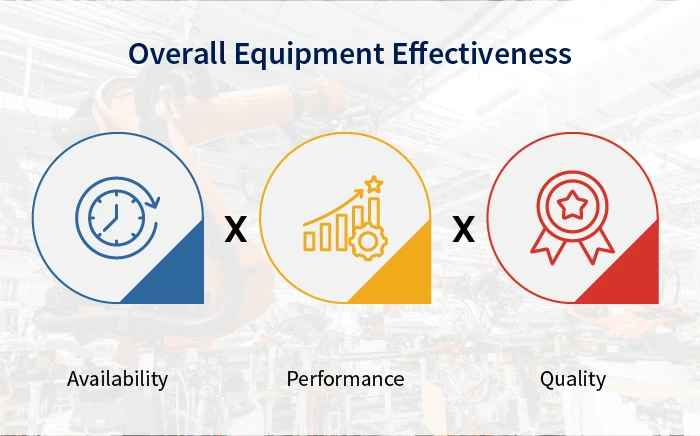
Overall Equipment Effectiveness (OEE) is one of the most comprehensive maintenance performance indicators as it includes equipment availability, performance, and quality into a single measure. It offers a comprehensive view of equipment effectiveness and outlines aspects that can be improved in the maintenance strategies.
A high OEE means that your equipment is available when required, is running at maximum capacity, and is producing superior outputs, all indicators of a good maintenance program.
When tracking OEE over time, facilities can identify losses resulting from inefficient maintenance practices, operator problems, or equipment design shortcomings. OEE becomes a very potent driver of continuous improvement and minimization of unexpected failures once it is used in combination with other maintenance KPIs.
It gets most effective when OEE monitoring is done through maintenance management software that can identify trends and aid data-driven decision making for asset reliability and overall effectiveness.
6. Preventive Maintenance Compliance
Preventive maintenance compliance is an indicator of how well your team is following the scheduled preventive maintenance tasks. It is determined by dividing the number of preventive tasks that have been completed by those that were planned, represented in percentage. High compliance will ensure that your maintenance department is carrying out the maintenance program effectively and preventing risks of unexpected failures and reactive maintenance.
Poor planning, insufficient staffing, or ineffective tools are among the common causes of low compliance. High compliance ensures the availability of equipment, increases the efficiency of maintenance and the reduction of the long-term maintenance cost.
This KPI should be closely monitored through preventive maintenance software that will automate the tracking process, send alerts for overdue maintenance tasks, and provide you with an accurate report on the effectiveness of your maintenance activities.
Also Read: Top 10 Challenges and Solutions in Field Service Management
7. Maintenance Cost per Unit of Production
Maintenance cost per unit of production reflects what you spend to undertake maintenance tasks for every unit of output produced. This maintenance KPI provides an immediate sense of how efficient your maintenance strategies are in terms of costs. When this metric increases, there are several possible reasons for it, such as inefficient processes, frequent breakdowns of equipment, or the usage of expensive reactive maintenance instead of preventive maintenance.
Knowing this cost makes it easier to budget and facilitates wise decisions about resources usage and investment in equipment/systems. By monitoring this maintenance metric with your maintenance management software, you can assess the return on investment for your maintenance program, find areas for cost savings, and contribute to overall business objectives regarding productivity and profitability.
8. Total Maintenance Hours Spent
The total maintenance hours tracked gives an idea of how much labor is put into both routine and emergency maintenance practices. This KPI is useful to determine productivity and workload of your maintenance personnel and ensure that tasks are distributed and completed properly. It also indicates if too many hours are being spent on reactive tasks, which might even suggest a gap in preventive maintenance.
Analysis of this maintenance performance metric would allow for better strategic allocation of resources and help to see training needs or inefficiencies in processes. This KPI data can be used to help managers plan better maintenance schedules, balance workloads, and make sure that the maintenance department is adequately staffed to meet operational demands. By automating this tracking with a computerized maintenance management system, accuracy and better forecasting are guaranteed.
9. Schedule Compliance
Schedule compliance measures the ratio of the maintenance tasks that are completed timely to those scheduled. It is a direct representation of how reliable your maintenance team is with the planned timelines, an integral part of maintenance performance. Low compliance causes delays, creates a backlog of maintenance aspects, and can affect the reliability of the equipment.
Conversely, high schedule compliance implies that your team is implementing the maintenance program as planned, maintaining preventive maintenance on track, and minimizing the risk of equipment downtime.
Monitoring this KPI using maintenance management software assists in determining delays in specific tasks, increasing maintenance efficiency, and ensuring discipline among the team to always meet maintenance goals.
10. Equipment Availability
Equipment availability is the percentage of time that a machine or system is available for use during total planned uptime. This KPI directly relates to the performance of maintenance and acts as an important indicator to the success of your maintenance practices.
High availability means that your maintenance team is doing a great job of reducing equipment failure and minimizing unplanned downtime.
This metric will be affected by how well you do preventive maintenance, your response to failures and how you manage spare parts. It is one of the most actionable maintenance key performance indicators because improvements made here directly impact output and customer satisfaction.
Utilize a computerized maintenance management system to monitor availability trends and coordinate maintenance activities with production and operational efficiency targets.
Final Thoughts
Effective maintenance key performance indicators tracking and analysis are fundamental for long-term success in maintenance management. These maintenance KPIs yield important insights about your maintenance operations, thereby showing you areas of inefficiency, unplanned downtime, and reduced equipment reliability. With contemporary tools such as a computerized maintenance management system or preventive maintenance software, facility managers can track the maintenance KPIs in real time, thus ensuring optimal allocation of resources and measurable progress.